Games for kids' birthday parties, toddlers and first birthdays, teens, and adult milestone birthdays. Each game lists group size, time, ages and what you need, with links to the printable cards and question sets.
Start with this one
Pass the parcel
Players
5 to 20
Minutes
10 to 15
Ages
3 to 8
You need
A prize wrapped in as many layers of paper as there are children, a sticker or small treat between the layers, and music
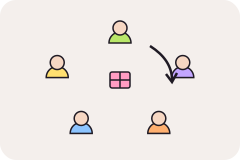
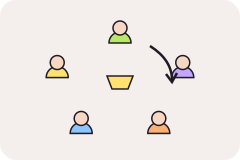
Sit the children in a circle.
Play music while they pass the parcel around.
When the music stops, the child holding it tears off one layer and keeps what is inside.
A deck of cards and one spoon fewer than the number of players
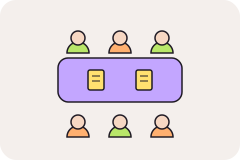
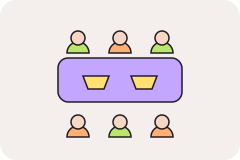
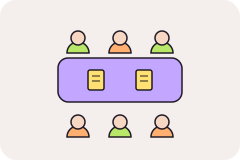
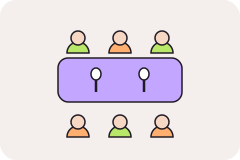
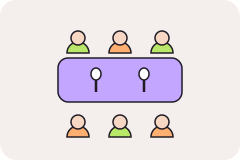
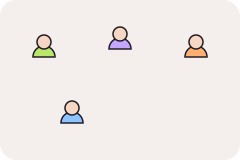
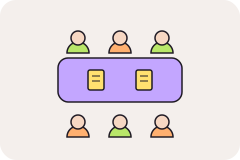
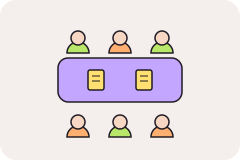
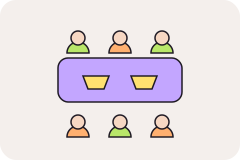
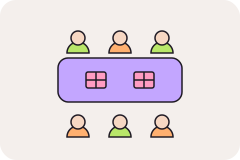
Suggested setup: tables. Put the spoons in the middle and deal four cards to each player.
Put the spoons in the middle and deal four cards to each player.
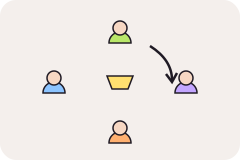
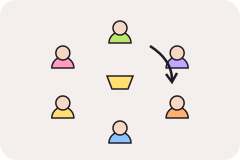
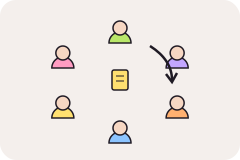
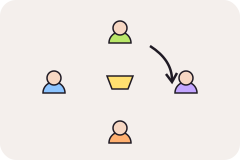
The dealer takes a card from the deck and passes one card to the left; everyone keeps passing one card to the left as fast as they like, always holding four.
A player who collects four of a kind quietly takes a spoon.
As soon as anyone takes a spoon, the others grab one too.
The player left without a spoon gets a letter, and after spelling SPOON they are out.
Sticky note who am I?
Players
3 to 12
Minutes
15 to 20
Ages
10 and up
You need
Sticky notes and pens
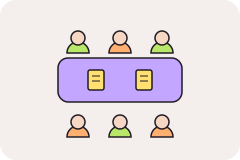
Suggested setup: tables. Each player secretly writes the name of a famous person or character on a sticky note.
Each player secretly writes the name of a famous person or character on a sticky note.
Stick the note on the forehead of the player to your left, so they cannot see it.
Players take turns asking one yes-or-no question about their own name, such as: Am I a real person?
A yes earns another question; a no passes the turn.
Players who guess their name keep answering for the others, and the last to guess picks the next theme.
Two truths and a lie
Players
4 to 15
Minutes
15 to 20
Ages
10 and up
You need
Nothing, or the prompt list for players who need ideas
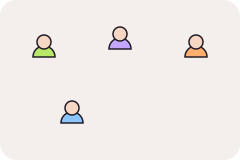
Suggested setup: spread out. Each player thinks of two true things about themselves and one believable invented one.
Each player thinks of two true things about themselves and one believable invented one.
On their turn, they say all three in any order.
The others vote on which one is the lie.
The player reveals the answer, and everyone who guessed right gets a point.
Nothing needs to be private: hobbies, places and skills work well, and anyone can pass.
15 questions the birthday person has answered in advance, an answer sheet per guest or team, and pens
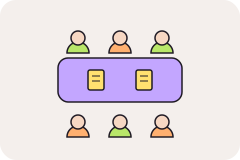
Suggested setup: tables. Before the party, the birthday person writes 15 questions about themselves, with answers they are happy to share: first job, favorite film, dream trip.
Before the party, the birthday person writes 15 questions about themselves, with answers they are happy to share: first job, favorite film, dream trip.
Guests or teams write their answers on a numbered sheet.
The birthday person reads out the real answers, with the story behind any they like.
Guests mark their own sheets.
The highest score wins; break a tie with a number question, such as how many countries the birthday person has visited.
Without a printer: Guests number a sheet of paper from 1 to 15.
10 to 15 numbered photos of the birthday person at different ages, paper and pens
Suggested setup: tables. Collect photos the birthday person is happy to show and number them.
Collect photos the birthday person is happy to show and number them.
Pin them up or show them on a screen in a mixed order.
Guests write down how old the birthday person was in each photo.
Reveal the ages; a guess within one year scores a point.
The birthday person can tell the story behind a few of the photos.
Memory and wish guessing
Players
8 to 50
Minutes
15 to 20
Ages
Teens and adults
You need
Cards, pens and a bowl
Suggested setup: tables. Each guest writes a favorite memory with the birthday person, or a wish for their year ahead, without signing it.
Each guest writes a favorite memory with the birthday person, or a wish for their year ahead, without signing it.
Fold the cards into the bowl.
The birthday person reads each card aloud and guesses who wrote it.
The writer may own up or stay anonymous.
The birthday person keeps the cards afterward.
Charades for adults
Players
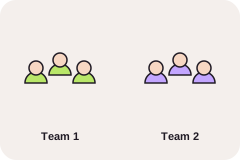
6 to 30, in two teams
Minutes
20 to 40
Ages
Adults
You need
Prompts on slips of paper and a one-minute timer
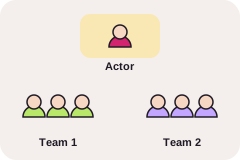
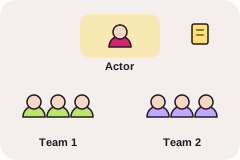
Suggested setup: one player at the front. Split into two teams, and mix a few prompts about the birthday person into the pile: their job, a hobby, a famous trip.
Split into two teams, and mix a few prompts about the birthday person into the pile: their job, a hobby, a famous trip.
Agree the signals first: number of words, which word, and sounds like.
An actor has one minute to get their team to guess, without speaking.
Score a point for each right guess.
Teams alternate until everyone has acted.
Without a printer: Actors read each prompt privately from a phone.