For each team, 20 sheets of paper and a strip of tape
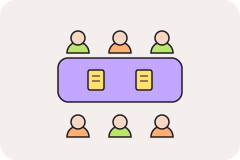
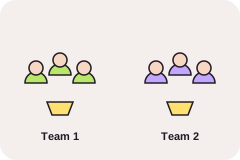
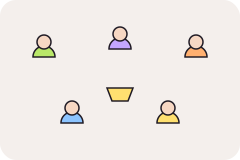
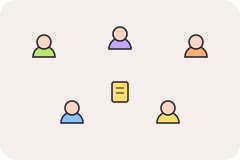
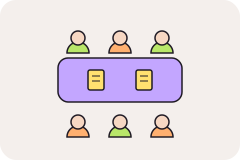
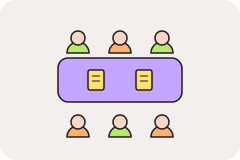
Suggested setup: teams. Give every team the same materials and five minutes.
Give every team the same materials and five minutes.
Each team builds the tallest tower that stands on its own.
Measure the towers, then ask each team what they would change next time.
Back-to-back drawing
Players
Pairs, any number
Minutes
10 to 15
Ages
8 and up
You need
Paper, pens and a few simple drawings to describe
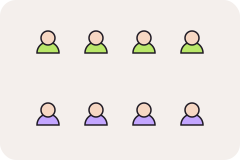
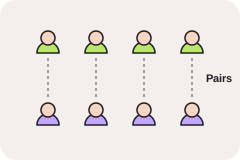
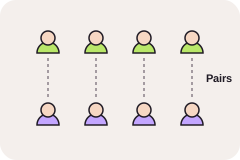
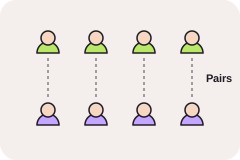
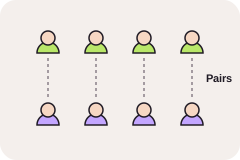
Suggested setup: pairs. Pairs sit back to back.
Pairs sit back to back.
One partner describes a simple shape drawing without naming it; the other draws it.
Compare the drawings, then swap roles.
Two-minute desert island
Players
6 to 40, in groups of 3 to 5
Minutes
10
Ages
8 and up
You need
A timer
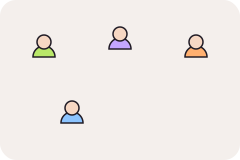
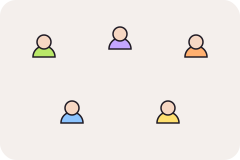
Suggested setup: spread out. In small groups, agree on three ordinary objects to take to an imaginary desert island.
In small groups, agree on three ordinary objects to take to an imaginary desert island.
Add one rule for life on the island.
Each group shares its list and its rule.
Story in a sentence
Players
4 to 15
Minutes
10
Ages
6 and up
You need
Nothing, or paper to write the story down
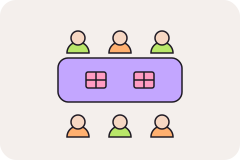
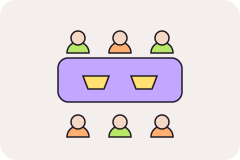
Suggested setup: tables. One person starts a story with a single sentence.
One person starts a story with a single sentence.
Each person adds one sentence in turn.
The last person gives it an ending and a title, and someone reads the whole story back.
Picture it
Players
Any number
Minutes
10
Ages
6 and up
You need
One unusual photo or drawing, on a screen or printed
Suggested setup: tables. Show the picture.
Show the picture.
Each person suggests a title, or what happened just before it.
Vote for the funniest and the most likely.
Name and a gesture
Players
4 to 25, in a circle
Minutes
5 to 10
Ages
5 and up
You need
Nothing
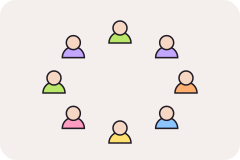
Suggested setup: circle. Standing or seated in a circle, each person says their name with a small gesture.
Standing or seated in a circle, each person says their name with a small gesture.
The group repeats the name and gesture back.
The next person goes. A wave or a nod counts as a gesture.
Category chain
Players
Any number
Minutes
5 to 10
Ages
6 and up
You need
Nothing
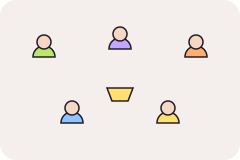
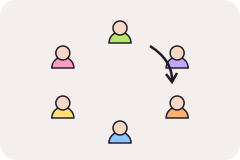
Suggested setup: circle. The host names a category, such as fruits.
The host names a category, such as fruits.
Around the circle, each person adds one item without repeating.
A pause of five seconds starts a new category, and nobody is out.
Common thread
Players
8 to 40, in groups of 4
Minutes
10
Ages
10 and up
You need
Nothing
Suggested setup: spread out. In groups of four, find three things everyone has in common that you could not see by looking, such as a favorite season.
In groups of four, find three things everyone has in common that you could not see by looking, such as a favorite season.
Keep to likes and experiences, not personal details.
Each group shares its best one.
Quick-draw introductions
Players
Pairs, any number
Minutes
10
Ages
8 and up
You need
Paper and pens
Suggested setup: pairs. Each partner describes a favorite place in a few words.
Each partner describes a favorite place in a few words.
The other has one minute to draw it; drawing skill does not matter.
Each shows the drawing to the group and names the place.
Two words
Players
2 to 30
Minutes
5
Ages
8 and up
You need
Nothing, or the chat on a video call
Suggested setup: spread out. Ask everyone to sum up how they arrive today in two words, such as “sleepy but curious”.
Ask everyone to sum up how they arrive today in two words, such as “sleepy but curious”.
Go around once.
Nobody explains unless they want to.
Group number count
Players
8 to 20
Minutes
5 to 10
Ages
8 and up
You need
Nothing
Suggested setup: spread out. The group counts from 1 to 20, one number per person, in no set order and without signals.
The group counts from 1 to 20, one number per person, in no set order and without signals.
If two people speak at once, start again from 1.
Play seated, with eyes open or closed.
Map of where we have been
Players
2 to 30
Minutes
10
Ages
8 and up
You need
A large printed map or a shared online map, and stickers or pens
Suggested setup: tables. Put up the map, or draw a rough one.
Put up the map, or draw a rough one.
Each person adds a dot for a place they have visited or would like to visit.
Each says one word about their place.
Pass the sound
Players
6 to 20, in a circle
Minutes
5
Ages
5 and up
You need
Nothing
Suggested setup: spread out. One person makes a sound and passes it to the next.
One person makes a sound and passes it to the next.
Each person copies the sound, then changes it slightly as they pass it on.
See how far it has travelled when it comes back round.
Treasure trade
Players
8 to 30
Minutes
15
Ages
10 and up
You need
Cards or slips of paper and pens
Suggested setup: tables. Everyone writes one useful tip on a card, such as a shortcut or a favorite recipe.
Everyone writes one useful tip on a card, such as a shortcut or a favorite recipe.
Mix the cards and hand them out.
Each person reads theirs aloud and the group guesses who wrote it.
Mirror partners
Players
Pairs, any number
Minutes
5 to 10
Ages
5 and up
You need
Nothing
Suggested setup: pairs. One partner leads slow hand gestures and the other mirrors them.
One partner leads slow hand gestures and the other mirrors them.
Switch roles.
Talk about what made the movements easy to follow. Play seated or standing; no contact is needed.
Group sketch
Players
3 to 15
Minutes
10
Ages
6 and up
You need
A sheet of paper or a shared drawing surface
Suggested setup: tables. Start drawing a shared imaginary place.
Start drawing a shared imaginary place.
Each person adds one feature and says what it is.
Stop when every volunteer has added something.
Common-ground pairs
Players
Pairs, any number
Minutes
10
Ages
8 and up
You need
Nothing
Suggested setup: pairs. Partners talk about a hobby, food or activity they enjoy.
Partners talk about a hobby, food or activity they enjoy.
Find one shared interest.
Introduce it to the group only if both agree, then swap partners.
Silent line-up
Players
8 to 30
Minutes
10
Ages
8 and up
You need
Nothing
Suggested setup: spread out. Players arrange themselves in order of the month of an invented birthday, using gestures only.
Players arrange themselves in order of the month of an invented birthday, using gestures only.
Read the months aloud afterwards to check the order.
Invented dates mean nobody reveals anything personal. Offer a seated version.
Object introductions
Players
4 to 20
Minutes
10
Ages
6 and up
You need
Ordinary objects in view
Suggested setup: spread out. Each person chooses an ordinary object in view and explains one possible use for it.
Each person chooses an ordinary object in view and explains one possible use for it.
The next player gives another use, or chooses another object.
Nobody needs to show a personal possession.
Three-word wish
Players
Any number
Minutes
5
Ages
10 and up
You need
A whiteboard or a shared document
Suggested setup: spread out. At the end of a first session, each person says three words for what they hope the group will get out of working together.
At the end of a first session, each person says three words for what they hope the group will get out of working together.
Collect the words.
Read them back at the next session.
Timer and team scores
8 turns × 60 seconds = 8 minutes of play, plus instructions and breaks.